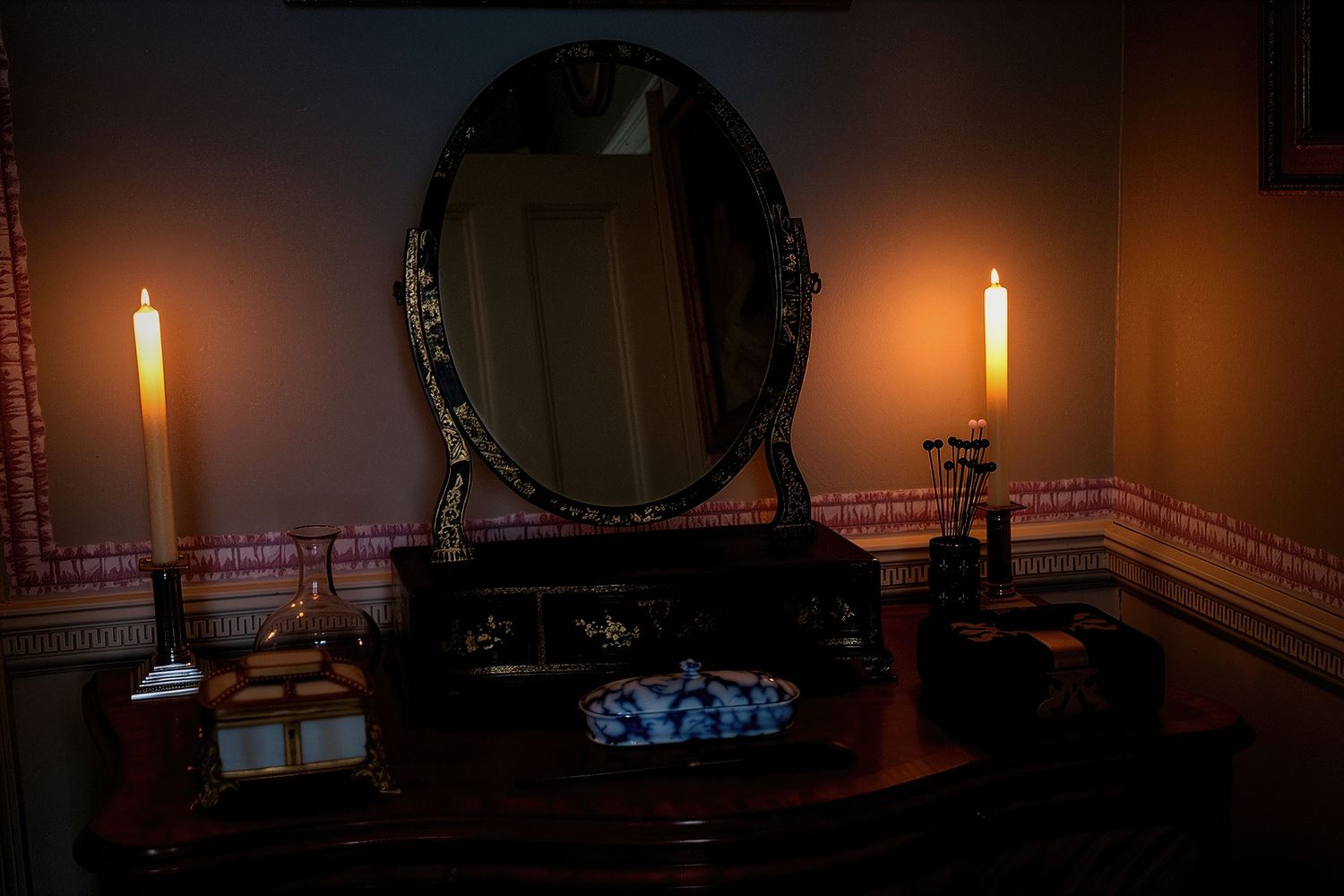
Trace of What Was Once
Something always stays.
Not the person. Not the voice, or the weight of a hand on a door handle worn smooth by decades of the same gesture. But something. A residue. The particular quality of stillness that settles into a room after it has been lived in and then left. You can feel it before you can name it. It arrives before the photograph does.
I have spent thirty years learning to read that feeling. To walk into a space — a decommissioned mill, a shuttered vestry, a corridor that hasn't heard footsteps in a generation — and to find within it not emptiness, but density. The forgotten room is never truly empty. It is full of everything that happened in it.
The trace is never the object. It is the relationship between the object and its abandonment. A coat hook without a coat. A ledger open to a page no one will ever complete. A window through which the light still falls at the same angle it always did, indifferent to the fact that there is no longer anyone to notice it. This is what draws me — not the relic itself, but the conversation between what it was and what it has become. You can see that tension throughout the collections, in work that refuses to treat forgotten things as merely picturesque.
Photography, at its most honest, is an act of witness. But witnessing absence requires a different kind of attention than witnessing presence. You have to learn to look at what isn't there. To see the outline of a removed picture frame in the discolouration of a wall. To understand that the chair facing the window is positioned that way because someone sat in it, for years, doing exactly what you might imagine — watching the light change, thinking their private thoughts, being alive in the ordinary way that leaves no record except this. That need to leave a mark, to be remembered — I've written about it separately in The Fear of Being Forgotten.
The work I make at Sanctum of Shadows is built entirely on this principle. The architecture does not need to be dramatic to carry meaning. Often the quietest spaces hold the most. A side chapel. A vestibule. A stairwell. Places that existed at the margin of ceremony, where the formal world loosened slightly and people were briefly, privately, themselves.
Trace is not nostalgia. I want to be precise about this. Nostalgia sentimentalises the past, makes it softer and safer than it was. What I am after is something harder — the acknowledgment that time moves in one direction only, that what is lost is genuinely lost, and that this fact carries weight. The images do not console. They ask the viewer to sit with the weight of it.
What photography can do, when it is working at full stretch, is make that weight visible. Not explain it. Not resolve it. Simply hold it still long enough for someone else to feel it too. That is the contract between the image and the person standing in front of it. That is what I mean when I write about making silence visible. That same photographic intelligence — the same reading of space and residue — is what I draw on when the space is imagined rather than entered, something I've written about directly in Without Constraints.
The trace of what was once is not a record of the past. It is proof that the past is still here — changed, diminished, but present. Folded into the texture of things. Waiting to be noticed by anyone patient enough to look — and the discipline of looking slowly is what makes that noticing possible.