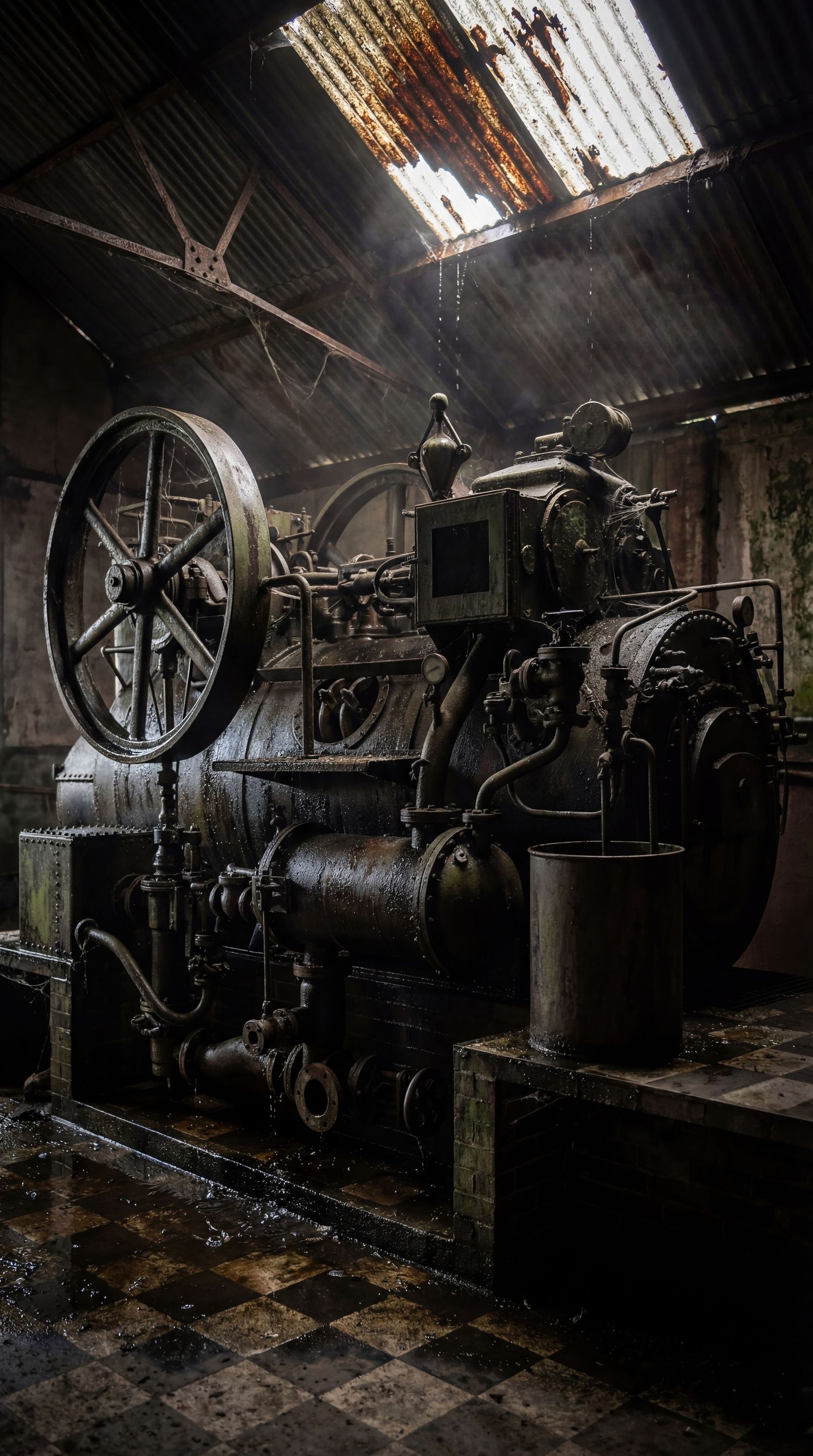
Where Iron Remembers
There is a cold that belongs only to iron. It outlasts the air around it, holds its temperature long after a room has warmed, and meets the hand like something still deciding whether to let you in. I have found it in engine houses and machine shops, in the stilled bodies of lathes and presses that once ran without pause. The men have gone. The work has gone. The iron has stayed — because iron does not know how to leave.
These were places of noise once. Belt and gear, the shriek of steel meeting steel, the low continuous hum a body learns to stop hearing. What remains is the opposite of all that: a silence so complete it feels borrowed from somewhere else. Oil has darkened the concrete until the floor itself carries the smell of the work. Damp has crept up the brick and settled in. And the light, when it comes at all, arrives grimed and sideways through glass no one has cleaned in forty years.
The machines did not fail. They outlived their purpose, and were left standing in the posture of work with nothing left to make.
I do not photograph these places to record what they were. The archive does that, and does it better. I photograph them because iron remembers differently than we do. A photograph of a person fades into that person’s absence. A photograph of a machine holds the absence of everyone who ever touched it — every hand on the lever, every shift, every last day a man walked out and did not come back.
It is the same pull that took me into what I found in the engine house, and that runs through the whole of Iron Without Witness — the sense that a lost world of manufacturing did not end so much as stop, mid-breath, and is still waiting to be finished. If you have ever wondered what draws me back to rooms like these, it is this: the iron is still keeping an appointment long after everyone else forgot it was ever made.
A print from this work does not announce itself. It settles into a room the way cold settles into iron — slowly, and then all at once. You may pass it for weeks and see only the surface. Then one evening the light will fall a certain way, and you will notice the oil sunk into the grain of the floor, the damp in the brick, the exact place where a hand once rested — and you will understand you have been living with a presence, not a picture.
I do not remember the first ruined machine I ever stood in front of. I remember the smell. Machine oil that has soaked into concrete for a hundred years does not wash out and does not fade; it waits in the cold and lifts the moment you disturb the air, and it is the exact smell of every workshop I have ever entered, collapsed into one. That is what iron remembers. Not the noise. Not the men. Not the making. The smell of the work, kept in the floor — released only when someone finally comes back to look.