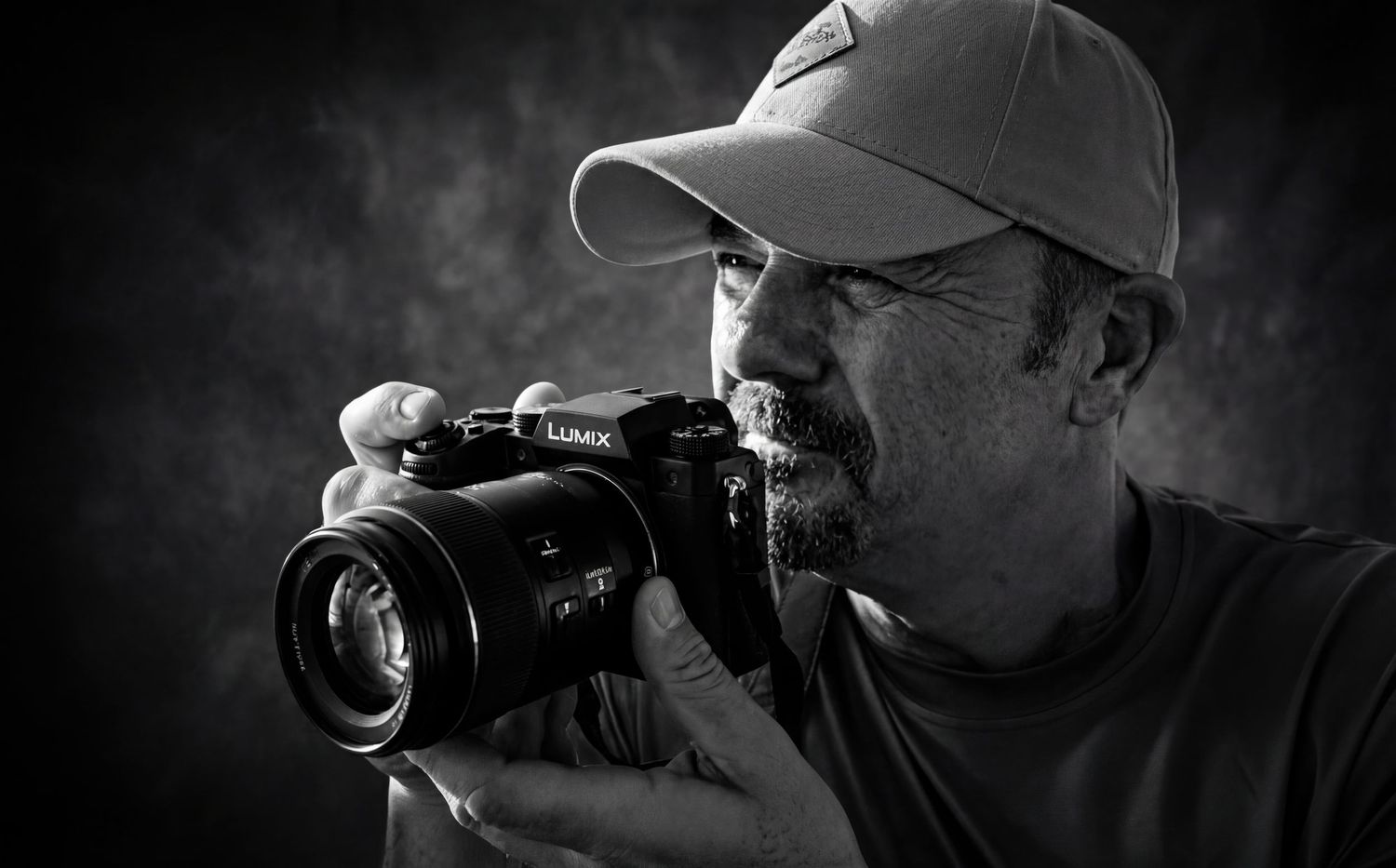
Michael Gane
Stillness, shadow, and the quiet weight of what remains.
I create dark, atmospheric fine art prints shaped by stillness, shadow, and the quiet weight of forgotten places. The work is less concerned with what appears in front of the lens and more with what remains after the moment has passed — when a scene shifts from something observed to something remembered.
For over thirty years I worked as a professional photographer in high-pressure, unrepeatable environments. That discipline taught me precision, emotional awareness, and the responsibility of carrying someone else’s story. The images that stayed with me were never the loud ones. They were made in the quiet after everything else had finished — empty rooms, lingering light, spaces left behind once purpose had moved on.
What draws me to these places is not documentation. It is recognition. I stand in churches, abandoned factories, and rooms where someone’s life has left its mark on every surface, and I feel the irreversibility of time. That feeling — the inner, deep gut response — is what the work exists to preserve.
The complete discipline of this pursuit, and why silence has become the central condition of the work, is explored in Making Silence Visible.
Over time the need to slow down became unavoidable. Fine art photography became the natural continuation: fewer images, more intention, space for ambiguity, silence, and emotional depth. The eye that shaped the work for thirty years has not changed. What has changed is the freedom to realise the images it has always carried — explained further in Without Constraints and My Creative Process.
The tools on that desk have changed more times than I can count — and each change was declared impossible before it became ordinary. I've spent thirty years watching that pattern repeat, from the darkroom to the desk, in Thirty Years of Hearing It Will Never Catch On.
Fifty-two years separate the ten-year-old who first believed a camera could hold memories from the photographer working today — a distance measured not in equipment but in learning to see. That whole journey, from Disney and Sony to thirty years of weddings to the silent rooms photographed now, is told in Fifty-Two Years of Looking.
Every image is produced as a museum-grade archival print on cotton rag, released in strictly limited editions of five, and offered without urgency. This work is not about volume. It is about presence — and the patience to let that presence reveal itself over time on the wall.
Whether you are choosing your first print or adding to an existing collection, the work is designed to earn its place in a room gradually. Guidance on scale, placement and what to look for is available in How to Collect Fine Art. Every edition is issued with a signed certificate of authenticity.
The wider body of work and ongoing reflections can be found across the fine art blog, and the full range of collections is available through The Collections.