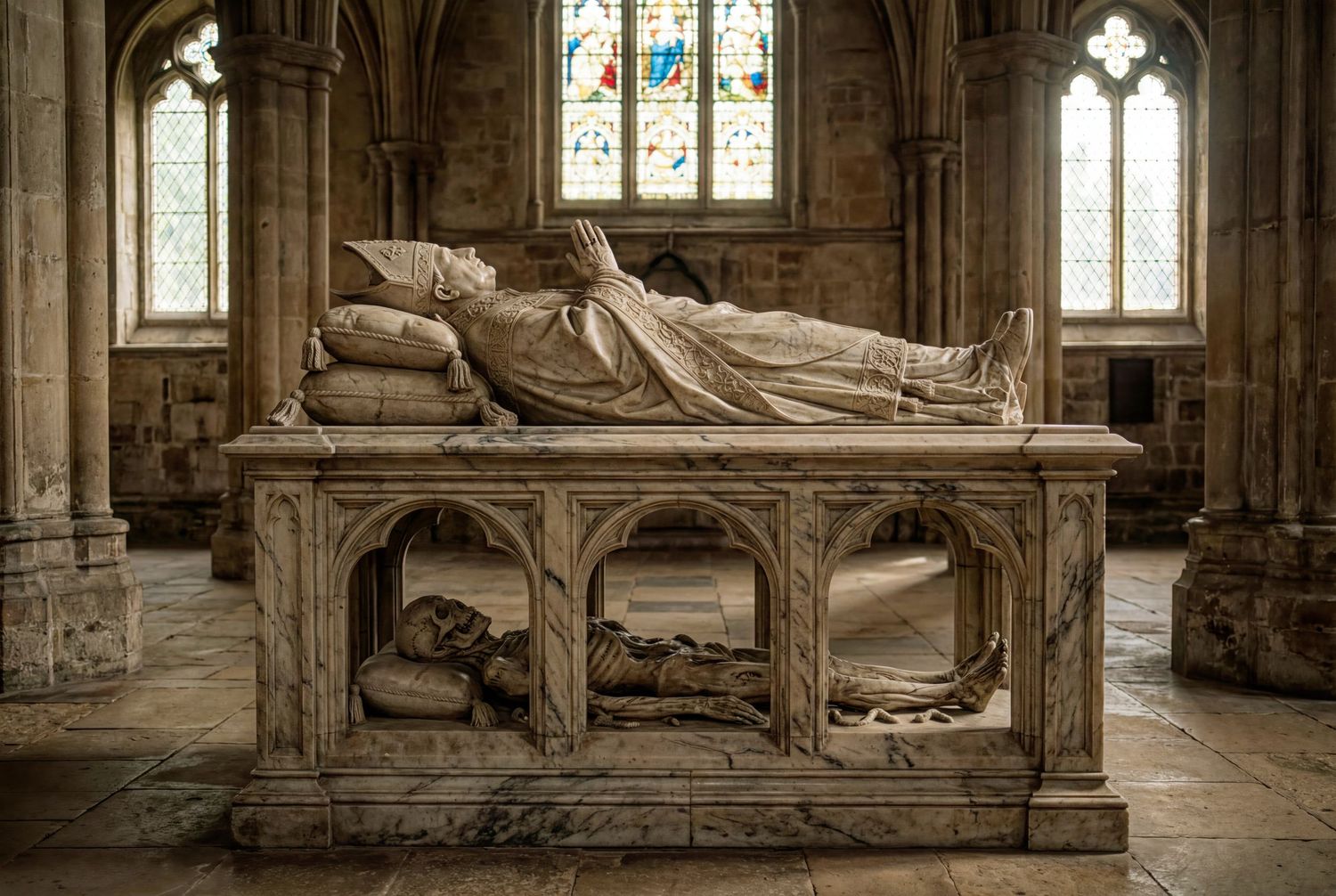
Every artist who has ever lived has had the same drive, and so will every artist still to come. The painter with the brush. The potter with the clay going cold under the hands. Somebody spending eleven months on a piece of marble to get one shoulder right. It comes from somewhere underneath the reasoning part, and it does not much care what material is nearest.
I have had it for thirty years with a camera. What I did not have, until recently, was a way of making the images that never presented themselves to be photographed.
That is what this collection is.
A closed system, in my own studio
This work is not made by typing a sentence into a website and waiting to see what comes back.
It is made on my own machine, inside a system I built and maintain myself. Nothing is uploaded. Nothing is sent anywhere. No subscription, no server in another country, no company holding my work on their hardware or learning from it. The whole thing runs offline, on a desk, in a room in Somerset — closer to a darkroom than to anything people imagine when they hear the words.
That matters to me for a plain reason. The images in this collection exist in one place until I decide otherwise, and I am the only person who has ever seen them being made.
How one is actually built
The system is a graph, not a text box. Nodes wired into other nodes — each stage feeding the next, each one a decision I have to make and none of them made for me.
Where the light enters the frame. What angle it comes in at, and how hard it falls when it arrives. What it reaches and, more importantly, what it refuses to reach. Depth, and how far back the dark is allowed to go. Which areas are masked off and reworked on their own, separately, sometimes a dozen times, because one corner is not behaving and the rest of the frame is already right.
Then it goes into Photoshop, and that is where the hours really go. Dodging and burning by hand, the way a print was once worked under an enlarger. Luminosity masks to hold the shadow detail where I want it and crush it where I do not. Colour pulled back until almost nothing is left of it. Grain matched so the surface reads as a photograph rather than something too clean to be real. Then the slow part — inspecting at full magnification, corner by corner, correcting anything that does not hold up close.
A single image takes hours. Several of them take days, and a few have been abandoned outright after all of it, because they never became the thing I could see when I started.
Nobody asks whether the chisel carved the marble. I know what I like, and I know what I like to see. That has not changed because the tool did.
The same eye
These images run along the same line as everything else I make. Darkness doing most of the work. One source of light and a long argument with it. Something withheld rather than explained.
If you have spent any time with the rest of my work — the empty naves, the iron that outlasted its purpose, the rooms nobody has walked into for years — you will recognise the hand. The restraint took thirty years to learn and it does not switch off when the tool changes. I have written about where that came from in What Draws Me There, and about why the dark is a subject rather than a background in Why Darkness Belongs.
Kept separate on purpose
This collection is set apart from my photographic work, and it stays that way.
You will notice it in the writing before you notice it anywhere else. When I photograph a place, I tell you about being there — the hour, the cold, the drive out, the light I waited for and sometimes did not get. The work in this collection is written differently. It speaks as itself, because I was never standing anywhere, and I am not going to pretend otherwise to make a sale.
That is the whole of the distinction, and it is the reason this page exists.
The prints
Each work here is issued exactly as the photographic work is: a strictly limited edition on Hahnemühle Photo Rag 308gsm cotton rag, with a certificate of authenticity carrying a permanent reference code.
Most are single editions. One print, and then never again — which is less a policy than an accurate description of how I work. Once a thing is made I have finished with it and I want to be making the next one. I have never wanted to print anything twice in my life.
The image can be looked at anywhere. The print exists once.