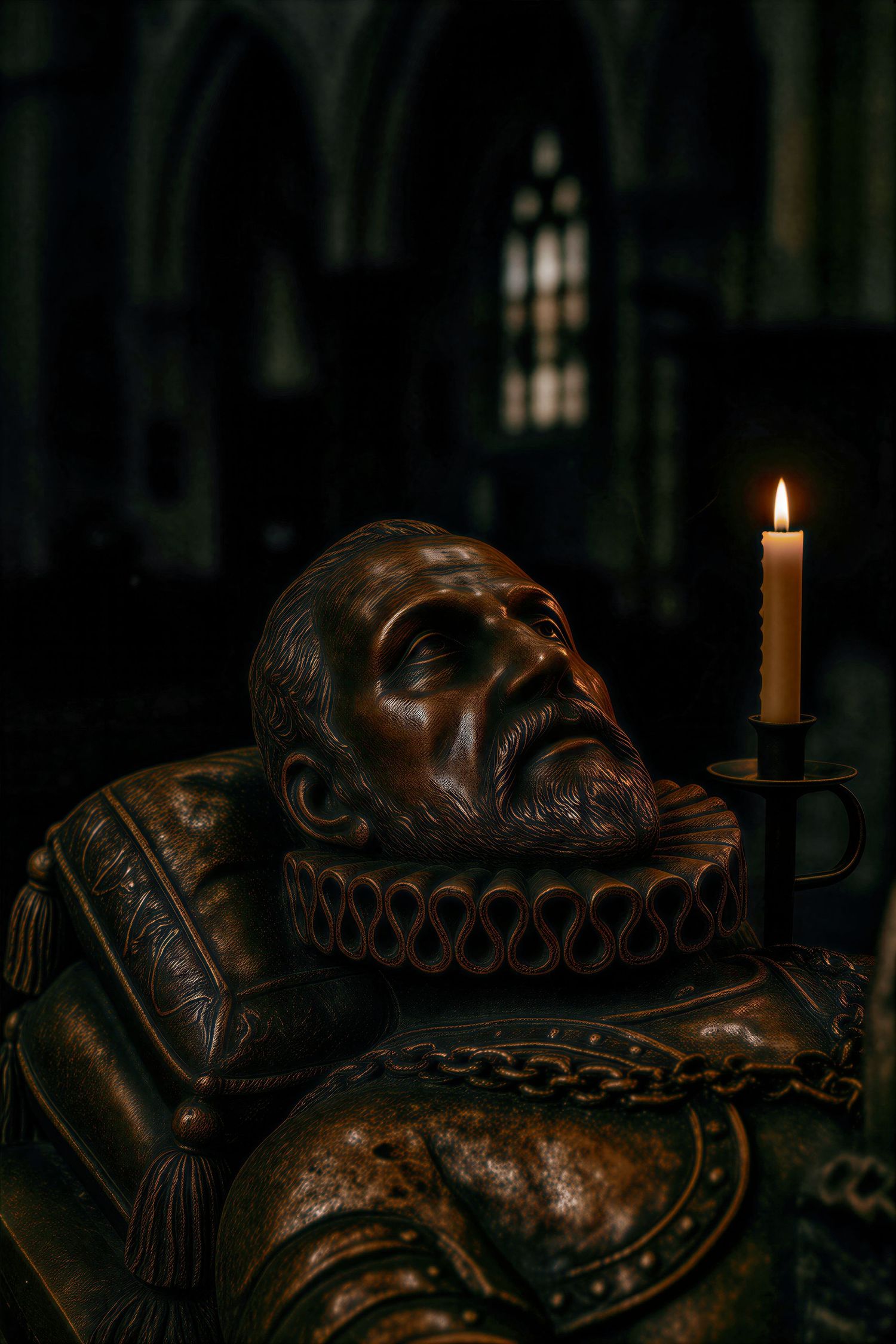
Church Interior Photography Prints: Owning Light, Silence, and Space
To own a photograph of a church interior is not to own an image. It is to hold a fragment of something that cannot be recreated once it has passed — the particular quality of light at a particular hour, falling across stone that has absorbed three hundred years of the same silence.
These buildings were not designed to be comfortable. They were designed to be felt. The proportions do something to the body — the ceiling too high, the nave too long, the light arriving from angles that have no equivalent in ordinary life. Standing inside one of these spaces, even the irreligious find themselves quieter than they intended to be.
That is what I am trying to fix into a print. Not the building itself, but the effect of it. The way a column catches the last of the afternoon and becomes briefly something other than stone. The way a shadow pools in a corner and refuses to leave. These are not accidents. They are the architecture working as it was always meant to — drawing the eye upward, slowing the breath, making the world outside feel very far away.
I have written elsewhere about church interiors and the architecture of silence — about why these spaces hold their atmosphere so completely, and why that atmosphere is so difficult to bring home. A print is one answer. Not a reproduction of the place, but a distillation of it. Something that carries the mood without requiring the journey.
Collectors often tell me there is a shift that happens after living with one of these works for a while. The print does not announce itself. It does not compete for attention. It changes with the light in the room — warmer in the morning, cooler by afternoon — and in doing so it becomes part of the rhythm of the space it inhabits rather than an object simply hanging on a wall.
Each edition is limited to five. That is not a marketing decision. It is a commitment to the integrity of the work — that the image remains rare, that the certificate of authenticity carries genuine weight, that the person who acquires it is not one of thousands but one of five. The scarcity is part of the object. It shapes how the work is held.
These pieces are printed on premium cotton rag — a surface that holds shadow differently from acrylic or gloss, that breathes with the image rather than sealing it behind glass. The matt quality suits the subject. These are not photographs that want to dazzle. They want to be returned to. They reward the second look, and the third, in ways that the first visit to the building itself rarely allows.
This reflection is part of a wider fine art blog, where each work is explored as a standalone presence — its atmosphere, its making, and what it means to live with it rather than simply observe it. The work on stillness as an active quality speaks closely to what these interiors ask of the viewer: not passive reception, but a kind of sustained attention that the image gradually makes possible.
It settles into a room over days. Finds its place in the peripheral vision before it finds its way back to the centre. That is when it begins to work properly — not as decoration, but as a sustained presence that the space around it quietly organises itself toward. For more on selecting works that resonate with your home, you may find my thoughts on the best prints for interiors a helpful guide.