The Room That Kept Waiting
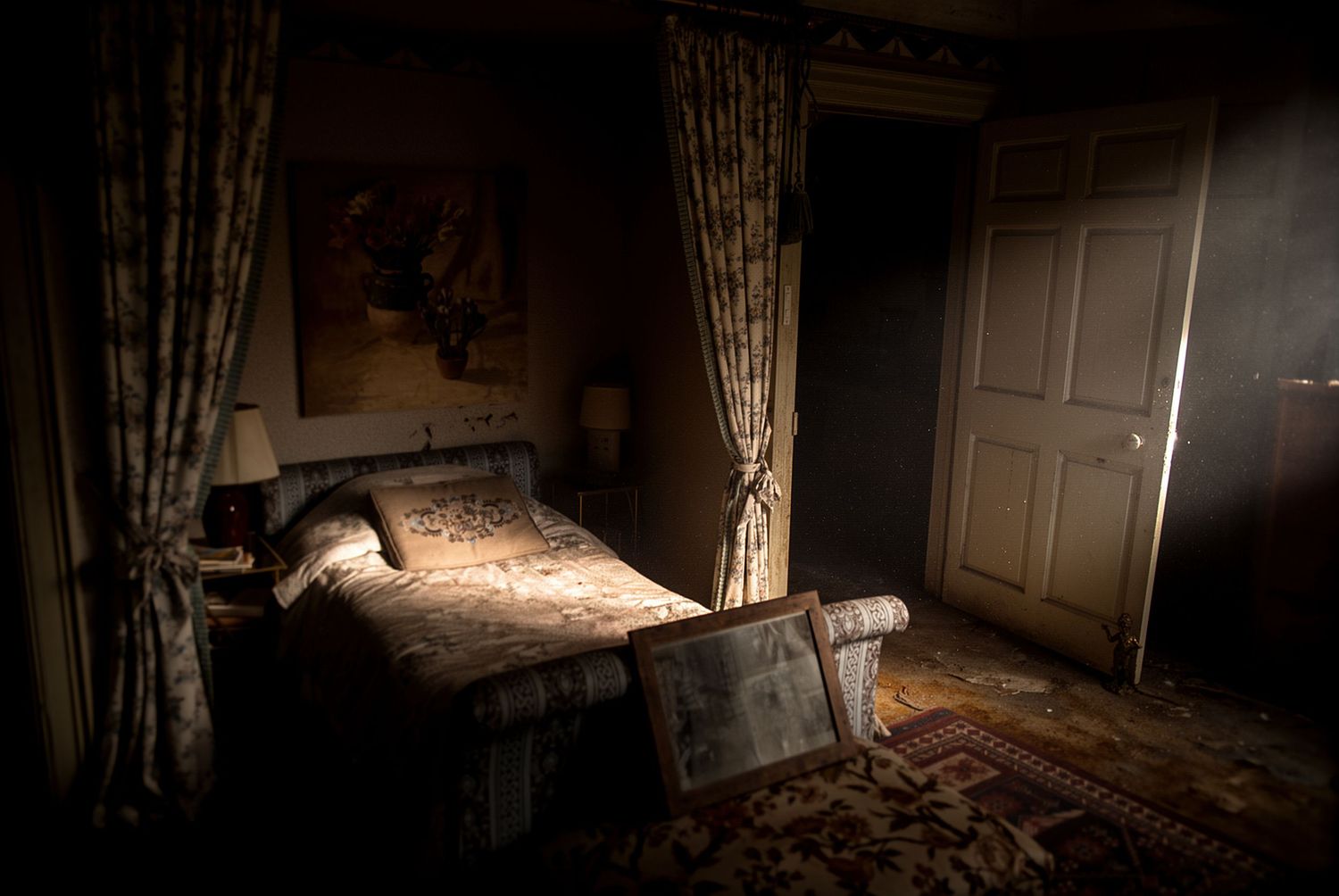
The photograph was the first thing I understood, and I understood it before I had crossed the threshold. It was propped against the armchair at the foot of the bed, half turned toward the room, the glass catching just enough of the light to make the figures inside it ghost-pale and uncertain. I did not need to see clearly who was in it. I already knew. A room like this only keeps one kind of photograph at that height, in that place, angled to be seen from the bed. It was her. Someone had put her there to watch over a room she no longer occupied, and someone — the same someone, I think — had never been able to move her.
The bed was built for two and had been sleeping one for what looked like a very long time. You can tell. The curtains were tied back with the same care they would have been tied back every morning for forty years, opened by hands that had done it without thinking, the way you brush your teeth or lock a door. That habit had outlasted the marriage. A single shaft of light came through where the curtains parted, fell across the foot of the bed, caught the embroidered cushion, and continued on to find the photograph waiting at the bottom of it — as though the room itself had arranged the two of them to face each other one more time.
I think about the years between. The room had clearly gone on being lived in after she was gone — the bed still made, the lamp still beside it, the small ornament still standing sentry by the door, exactly the kind of object a person stops seeing after the first year of grief but cannot quite bring themselves to put away. This was not a room frozen at the moment of loss. It was a room that had continued, quietly, with one fewer person in it, for however long he had left. A widower’s room. Not abandoned in an afternoon. Worn down slowly, by a single set of footsteps crossing the same floor, year after year, toward a bed that had once held two and had learned, eventually, to hold one.
Some rooms are abandoned in a single day. This one was abandoned slowly, one year at a time, by a man who never quite finished saying goodbye to it.
What stopped me at the door was not the dust, though the dust was considerable, nor the damage to the ceiling, though I noticed it. It was the photograph’s angle. Someone had not simply left it on a shelf. They had propped it where the light would find it, where a man waking in that bed would see her before he saw anything else in the room. That is not neglect. That is devotion continuing long after the person it was devoted to had stopped being able to receive it. This is what draws me there — not the decay itself, but the evidence of a love that kept performing its small rituals to an audience of one, in a room that the rest of the world had already written off.
I have photographed many rooms after conversation — spaces where the voices have stopped and the silence has had time to settle into the furniture. This room was different. The conversation here was one-sided for years before it stopped altogether. A man speaking, perhaps without meaning to, to a photograph propped at the foot of his bed. Telling her about the day, or not telling her anything at all, simply allowing her to be there while he existed in the room they had built together. I cannot know what was said in that room in its last years. I only know that someone arranged the light to keep finding her, and that arrangement was the most honest thing left in the house.
There is a temptation, photographing a room like this, to make it about the ruin — the water damage above the headboard, the rug gone threadbare and stained, the small toy figure abandoned by the door as though someone, a grandchild perhaps, had once played in a corner of a room that was never really meant for play. I resisted that temptation as best I could. The ruin is not the subject. The subject is the years before the ruin, the years when this was simply a man’s bedroom, and every morning the curtains were opened the same way, and every night the photograph was still facing the right direction, because somebody made certain of it.
I do not know when he stopped coming into that room for the last time. I only know that the door was left open afterward, and the light kept arriving on schedule regardless, the way it always does, and somewhere in the months or years since, the room stopped being maintained and started simply being preserved — by absence, by stillness, by nobody disturbing what had already been so carefully arranged. The photograph is still facing the bed. I made sure of that before I left. It seemed like the only thing left that I could still get right.
If you have ever loved someone long enough that the rituals outlasted their need — the room you couldn’t quite change, the photograph you couldn’t quite move — the work is where I have tried to keep it.