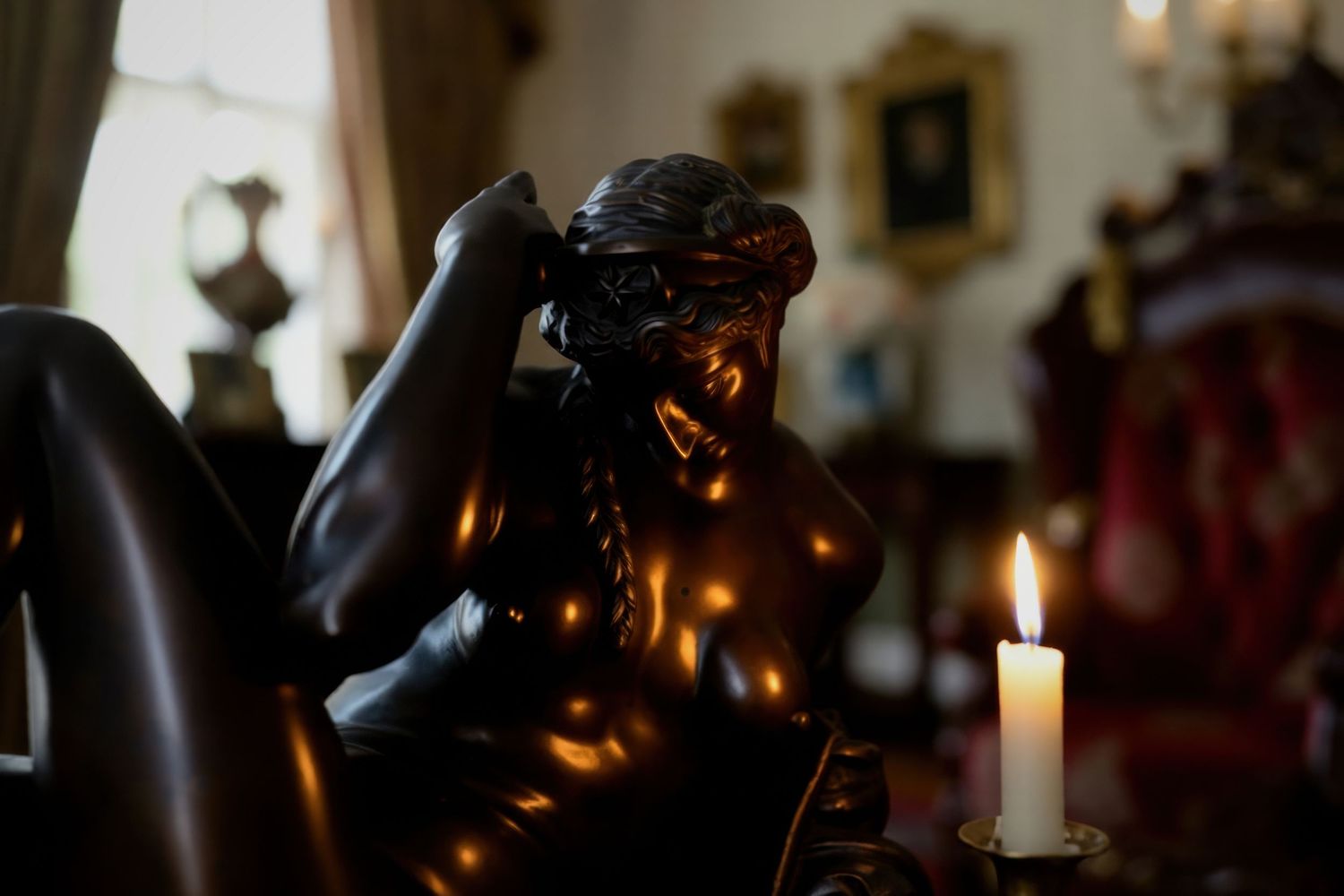
The Phantom Listeners
Empty rooms are not empty.
I have known this for as long as I have been making photographs, though for most of that time I could not have told you precisely what I meant by it. There was just the feeling — arriving before the camera came out, before any compositional decision was made — that a space contained more than its physical contents. That something dwelled in it. That to walk in and begin photographing without acknowledging that first was to miss the whole point.
Thirty years of working in forgotten buildings will teach you to read that feeling as information rather than imagination. The particular stillness of a room that has been sealed. The quality of air in a corridor that hasn’t been disturbed in a generation. The way certain spaces seem to hold their breath when you enter — not because they are waiting for something, but because they have been waiting for so long that waiting has become their natural state. These are not metaphors. They are the actual conditions under which I work, and they shape every decision I make behind the lens.
I did not expect to find all of this articulated in a poem written in 1912. But Walter de la Mare had been there before me — before any of us, perhaps — and he had found the only language equal to it.
But only a host of phantom listeners
That dwelt in the lone house then
Stood listening in the quiet of the moonlight
To that voice from the world of men.
The phantom listeners do not speak. They do not act. They simply dwell, and listen, and the moonlight falls on them, and the voice from the world of men arrives and finds them already there. This is not a haunting in the dramatic sense. It is something quieter and more accurate — the sense that a space accumulates the presence of everything that has occurred within it, and that this accumulation does not simply vanish when the last person leaves.
This is the territory I photograph. Not ghosts in the popular sense — I have no interest in spectacle or sensation. But the quality de la Mare names so precisely: that dwelling. The sense that forgetting, in the official human sense, does not erase. That a room in which people lived and worked and perhaps suffered and certainly were ordinary continues to hold that fact within it, quietly, without drama, in the texture of its walls and the particular angle of its light. You can feel this in almost every image in Sanctum of Shadows — spaces that have been left but not vacated.
What photography can do with this — what I have spent three decades trying to do with it — is render that dwelling visible. Not explain it. Not dramatise it. Simply hold the light still long enough, and frame the space carefully enough, that the viewer feels what I felt when I walked in. That is what making silence visible means in practice. The camera does not create the atmosphere. It finds it, and preserves one moment of it, and offers that moment to someone who was not there. The question of how that same photographic intelligence operates when the space is imagined rather than entered is one I have addressed directly in Without Constraints.
The voice in de la Mare’s poem calls out and receives no answer. But he is heard. The listeners are there. They simply exist in a register that ordinary speech cannot reach. I think about this often when I consider what it means to photograph spaces that have been forgotten — that forgetting is a failure of attention, not a fact about the space itself. The space continues. The dwelling continues. The listening continues. All that is required is someone willing to arrive quietly enough to notice it.
This is what recognition, not discovery means to me in practice. I do not go to these places to find something new. I go because something is already there, already waiting, already present in the way de la Mare’s listeners are present — not assertively, not dramatically, but with the absolute patience of things that have been in one place for a very long time. The work of the photographer, like the work of the poet, is simply to be still enough, and attentive enough, to make that presence felt.
I have stood in enough ruined chapels and sealed engine rooms and lightless vestibules to know that de la Mare was not writing fantasy. He was writing observation. The lone house is real. The moonlight is real. And the listeners — whatever name you choose for them — are as real as the marks left on every surface by every hand that ever touched it.
They dwell. They are dwelling still. The work is simply to bear witness — across the full body of work collected here — to the fact that they were never, not for a single moment, gone.