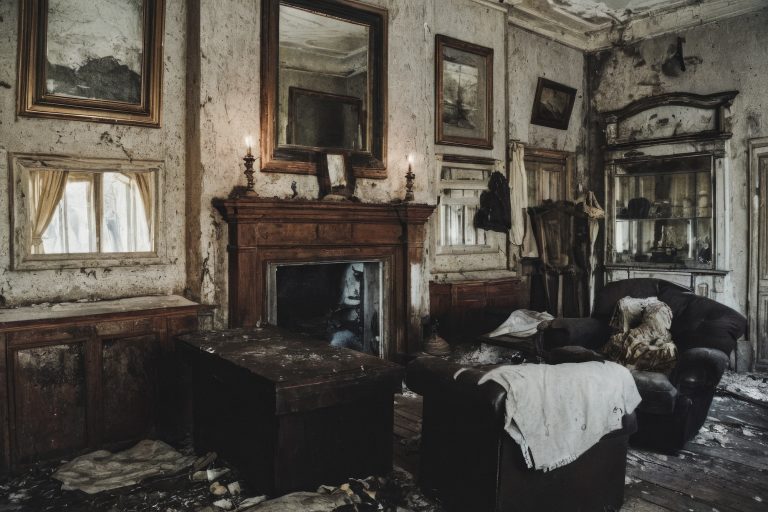
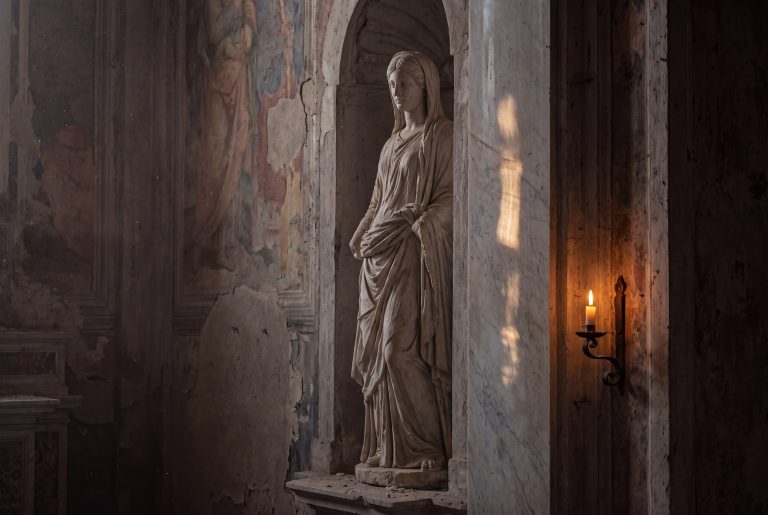
For most of my working life the camera was both companion and constraint. I could only photograph what the light allowed, when the doors were open, when the weather permitted, when I could physically stand in the space. That discipline taught me patience. It taught me how to wait. It also taught me how much I was leaving behind.
There were rooms I could feel but never fully reach. Atmospheres that existed for a few minutes and then vanished. Light that fell in ways the camera could never hold. I carried those missed images for years.
The eye had always been ready.
The walls simply would not move.
When I began directing images from my own photographs, something fundamental changed. The physical limits did not disappear — they became irrelevant. I could now take a moment I had genuinely witnessed and push it until it matched the feeling I had when I stood there. Not by adding drama, but by removing everything that diluted it.
This is not about speed or convenience. Many of these images still require dozens of careful decisions. The difference is that the decisions are no longer fighting against the limitations of the moment. They are serving the atmosphere I felt.
What the collector receives is work that carries more of that original encounter. The silence feels heavier. The light feels more deliberate. The presence in the room is stronger because I was able to stay with the image longer than any single visit would have allowed.
I have written elsewhere about the shift in my practice. If you want to understand how I arrived here, and why I now work this way without apology, you can read Without Constraints.
The benefit is not that the work is easier to make.
The benefit is that it is truer to what I saw.
For the collector, this matters. You are not acquiring an image that stopped at the edge of what was possible on the day. You are acquiring work that was allowed to become what it needed to be. That depth of intention is what makes a print worth living with for decades.
The same eye that waited in cold churches for the right light, that returned to the same thresholds year after year, is still the eye making these decisions. The tools simply removed the walls that used to stand between the feeling and the finished piece.
This is why the work continues to feel like mine. Because it still begins with presence. It still begins with looking. The difference is that the looking is no longer required to end too soon.