The Chamber Keeps Its Counsel
Oak holds warmth differently to any other wood. Not the flat warmth of central heating or the sharp warmth of a radiator — but something older, slower. The kind that has been absorbed and given back over centuries, that lives inside the grain rather than on the surface. I stood in this room and I felt it before I saw it. The smell of it first. Dust and beeswax and something underneath that I couldn’t name but recognised the way you recognise a piece of music you haven’t heard since childhood.
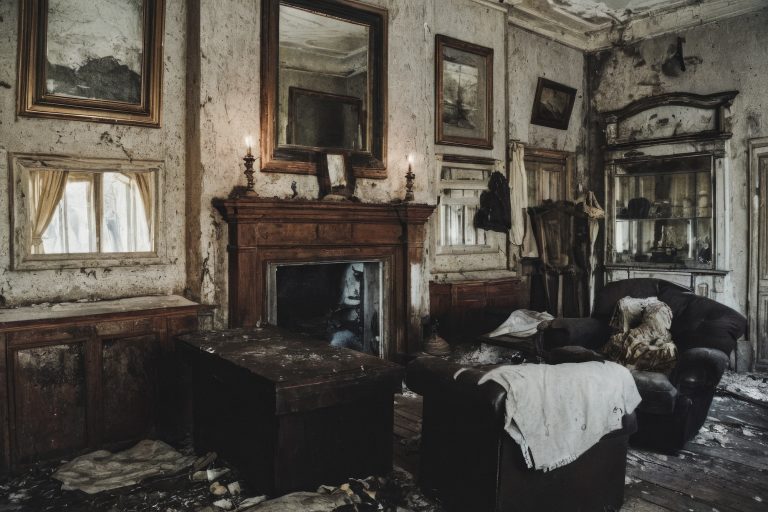
Four candles. That is all this room asked of me. Four candles on a gilded chandelier suspended by a single chain from beams that have held the same position since before photography existed, before electricity was imagined, before the world decided that darkness was something to be solved rather than lived in. The candles did what they always do — they pulled the room forward out of the black, revealing things slowly, in the order they chose rather than the order I might have preferred.
The tapestries came first. Figures in muted blue and ochre, worn at the edges, hung on panelled walls that have seen every season this county has offered. Then the bed — a four-poster of carved oak so dense and deliberate it looked less like furniture and more like architecture. The craftsman who made it is four hundred years gone. The bed remains, exactly as he left it, in the room it was always meant to occupy.
What struck me, standing there in the quiet, was the absence of hurry. Everything in this room was made slowly, used slowly, and has aged slowly. The cobwebs in the corner of the chandelier were not neglect — they were part of the record. This is a room that does not perform. It simply continues. It has outlasted every opinion about what a room should look like, every fashion, every renovation, every generation that thought it knew better than the one before.
I think about rooms like this differently since I started photographing them. There is a full reflection on what draws me to spaces like this in my piece on The Veiled Choir — how certain interiors carry an emotional residue that has nothing to do with their current occupants and everything to do with their accumulated silence. This room belongs to that family. It knows things. It simply chooses not to tell.
The flagstone floor caught my eye last. Worn in the centre — not by one person, but by thousands of crossings, thousands of ordinary mornings that no one recorded because they were too ordinary to bother with. Someone woke here in winter and walked on this stone in cold feet. Someone was born in that bed. Someone was carried out of this room and never came back. The stone holds the shape of all of it without holding any of it — present only as a shallow depression that you’d miss if you weren’t looking down.
This work connects to the wider body of candlelit interior photography explored across the site — you can find related work in the Candlelit Guardian and in the flame-and-shadow studies of The Angel and the Single Flame. The full Tudor candlelit interior collection is gathered at Tudor Silence, where this work will take its place among the others.
The Chamber Keeps Its Counsel does not demand your attention. It sits in a room and waits, the way this room has always waited — patient, unhurried, certain that anyone who gives it time will eventually understand what it is. It changes with the light around it. In the morning it is amber. In evening, it is almost black at the edges, with those four flames still burning at the centre, indifferent to the hour. It rewards returning to it. Every time, something different comes forward that you hadn’t noticed before — a carved detail in the bedpost, a figure in the tapestry, the slight curve of the chandelier chain under its own weight after four centuries of hanging. It does not give itself up all at once. It never has.
The Chamber Keeps Its Counsel
Printed on premium cotton rag · Issued with a certificate of authenticity