Inside the Sanctum of Shadows: Where Absence Becomes Presence
There is a point where an image stops explaining itself. It no longer tries to convince, to impress, or to earn its place. It simply holds. The Sanctum of Shadows exists in that space — past the threshold where light gives way, and what remains begins to matter more than what has gone.
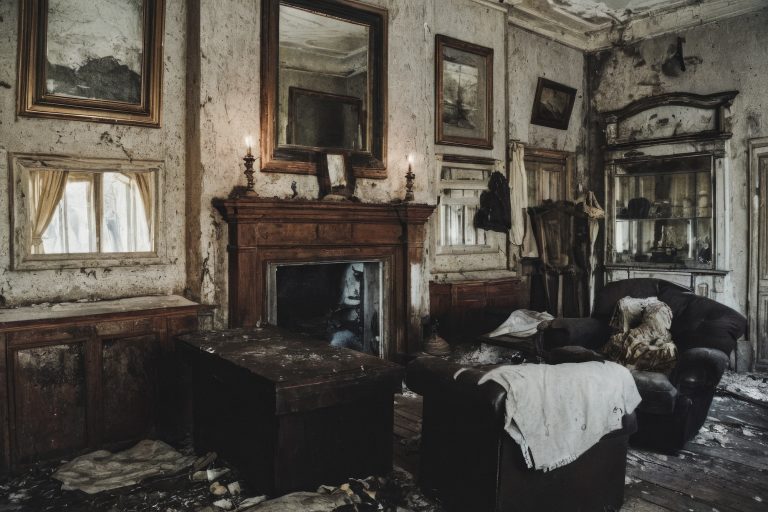
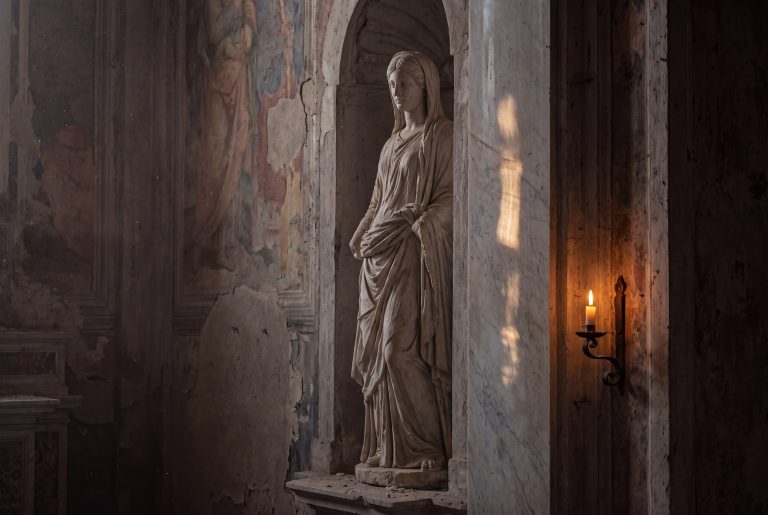
I did not plan this collection. I found it the way you find something you have always known — by standing in a place that felt like a held breath. Churches that had stopped being used but had not stopped being present. Interiors where the silence was not empty but accumulated. Where generations of devotion had pressed themselves into stone and timber and the particular dark that gathers in high, unreached corners.
Shadow in these spaces is not the absence of light. It is what light has shaped over centuries and then slowly withdrawn from. The darkness in these photographs has weight. It has a specific temperature. It carries the residue of everything the space has witnessed — and declined to let go of.
What draws me back, collection after collection, is the question of how much to remove. The temptation in any dark interior is to compensate — to push the exposure, to retrieve the detail, to rescue the image from its own restraint. I have learned to resist that. The works I trust most are the ones where I left the darkness alone. Where I let the shadow hold what the shadow wanted to hold.
This instinct connects, I think, to something explored in why some photographs ask you to slow down — the idea that difficulty of access is not a failure of communication but a form of it. An image that yields everything at once has already finished. An image that withholds asks you to return. And returning is where the relationship between a viewer and a work actually begins.
The ecclesiastical spaces in the Sanctum were not chosen for their grandeur. Several are modest. Some are almost plain. What they share is an atmosphere that resists the present tense — a quality of existing slightly outside of now. You do not photograph that quality by flooding it with light. You photograph it by trusting what is already there, and keeping your own interference to a minimum.
I have written before about making silence visible — about the particular difficulty of translating an experience that resists language into something that can be carried out of a space and hung on a wall. The Sanctum of Shadows is where that problem is most directly confronted. These are not photographs of beautiful architecture. They are photographs of what that architecture holds in the dark — presence without source, weight without form, a stillness that does not feel like stillness so much as waiting.
The works in this collection sit within a longer conversation about what fine art photography is for. Not documentation. Not illustration. Not the confirmation of beauty already agreed upon. Something closer to what The Vigil of Stone reaches toward — the idea that certain subjects carry a gravity that the camera can serve, if the photographer learns to get out of the way.
The Sanctum does not announce itself. It does not compete. It reveals itself differently depending on the room it enters, the quality of the evening light, the patience of whoever stands in front of it. That is not a limitation. That is the whole point.
Further Reading: Deepen your understanding of this collection with The Architecture of the Sanctum: A Study in Candlelit Stillness.