Cold Hands, Held in Grief
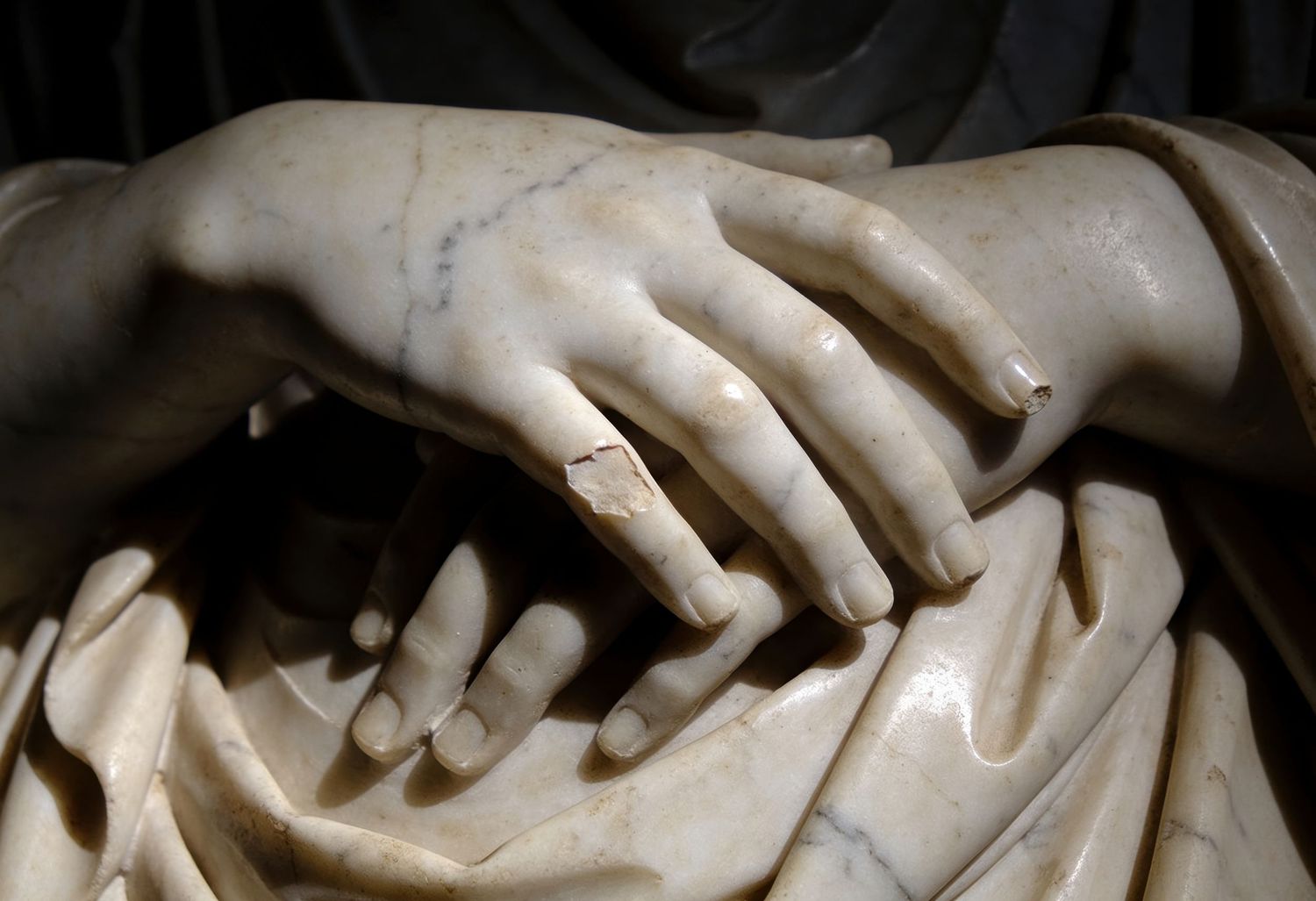
She isn't hiding her face. Most weeping figures do — the head turns, the hand covers the eyes, and the sculptor lets the viewer off lightly. This one doesn't. She has pressed her own hands together and buried her mouth into them instead, as if grief needed somewhere physical to go, and the nearest place was her own fingers.
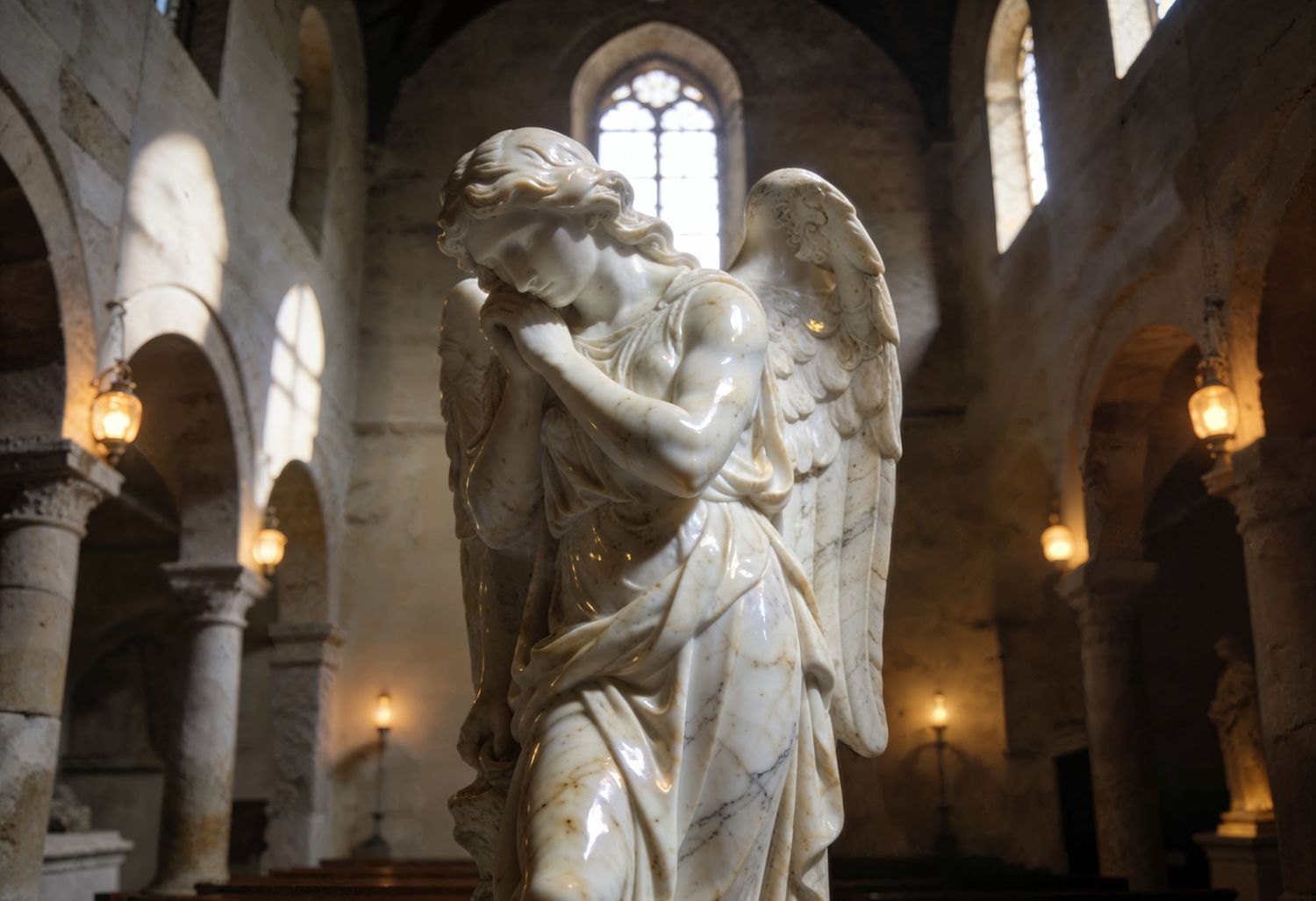
I photographed the whole nave first. The arches, the lanterns, the window bleeding cold light behind her wings — all of it correct, all of it forgettable. It was only when I came in close, low, level with her hands, that the image stopped being architecture and became a person. Marble doesn't usually convince me of that. This did.
Stone doesn't grieve. And yet here it does — in the knuckles, in the fold of one hand into the other, in a gesture too specific to have been carved from imagination alone.
This is part of a wider way of seeing I've written about at what draws me there — the pull toward things that hold stillness the way people can't. Marble can hold a single expression forever. We can't. That's precisely why I keep returning to sculpture like hers.
The wings tell you what she is. The drapery tells you when she was made. But the hands are the only part of her that isn't performing for the room. I've felt that same quiet elsewhere too — in the private grief carved into the piece I wrote about in She Who Has No More Tears, where sorrow is likewise held in the body rather than announced by it.
Candlelight does something specific to marble that daylight never manages — it doesn't illuminate the stone so much as negotiate with it, deciding scene by scene what gets seen and what stays in shadow. I explored that same negotiation of light and grief in The Weeping Angel, though this figure asked something different of me — she asked me to look at her hands longer than felt reasonable.
I stood in front of her for a long time — far longer than the photograph needed. Not looking at her face, not looking at the wings. I was looking at the cold detail of her hands, held together in grief, and I couldn't stop. There was nothing warm about that marble. And that was exactly the point — grief this old shouldn't feel warm. It should feel like stone that has been holding the same position for longer than any of us have been alive, and has no plan to let go.
Cold Hands, Held in Grief
Gallery-framed · Premium cotton rag · Issued with a certificate of authenticity