She Who Has No More Tears
Grief does not stand upright. It finds the nearest edge and folds itself over it — arms hanging, wings dragging, the weight of what cannot be undone pressing everything downward into the stone.
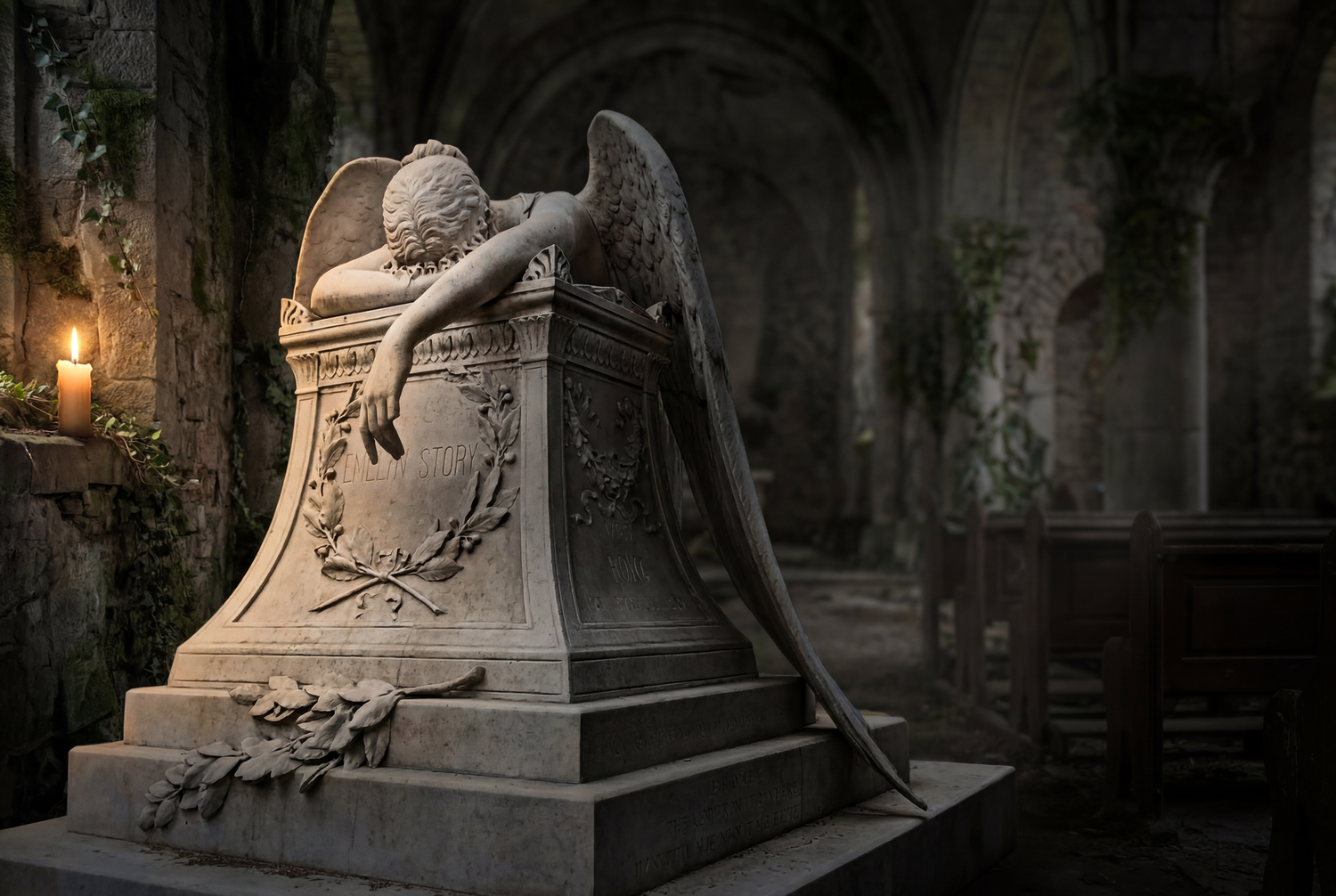
This angel has surrendered. Not to the darkness, not to time, but to something older than both. She has pressed her face into the tomb as though listening for a sound that will never come. The marble laurel wreath has slipped from its place and lies abandoned at the base. Even the gesture of honour has been let go.
A single candle burns to the left. Not enough to illuminate — only enough to remind. Its light catches the edge of a wing, the curve of a shoulder, the trailing fingers of a hand that has nothing left to reach for. The cloister behind recedes into soft dark, ivy threading through the stone arches as though the building itself is slowly being reclaimed. The world beyond this moment is already dissolving.
I have spent a long time photographing figures in stone — the Bone and Marble collection grew from a belief that funerary sculpture holds something no other art form quite manages: the permanent record of a feeling. These monuments were not made to be looked at. They were made to carry grief forward through time, long after the people who commissioned them had followed into the same silence.
This image does not try to beautify that weight. The composition is close, almost uncomfortable — you are brought near enough to read the name carved into the tomb, near enough to feel the chill of the stone, near enough to recognise something in the posture that belongs to every person who has ever stood at a loss for what to do with sorrow.
There is a particular quality to grief made permanent in marble — a stillness that has been considered and shaped rather than simply endured. I have written about this elsewhere, in a reflection on the life inside the stone — the way carved surfaces hold temperature, shadow, and emotional memory in ways that resist easy explanation. This image belongs entirely to that conversation.
She Who Has No More Tears changes with the room it enters. In low light it becomes almost unbearable — the candle, the marble, the collapsed wings pressing into the dark. In morning light it opens differently, the stone warming, the grief becoming something closer to rest. It does not announce itself. It settles into a space and waits, the way grief itself waits, returning quietly when you are least expecting it.
This reflection is part of the wider vigil of stone — a body of work concerned not with death itself, but with the forms devotion takes when it has nowhere left to go. With the postures that outlast the people who struck them. With the silence that remains.
It is not simply observed. It is lived with.
She Who Has No More Tears
Premium cotton rag · Issued with a certificate of authenticity