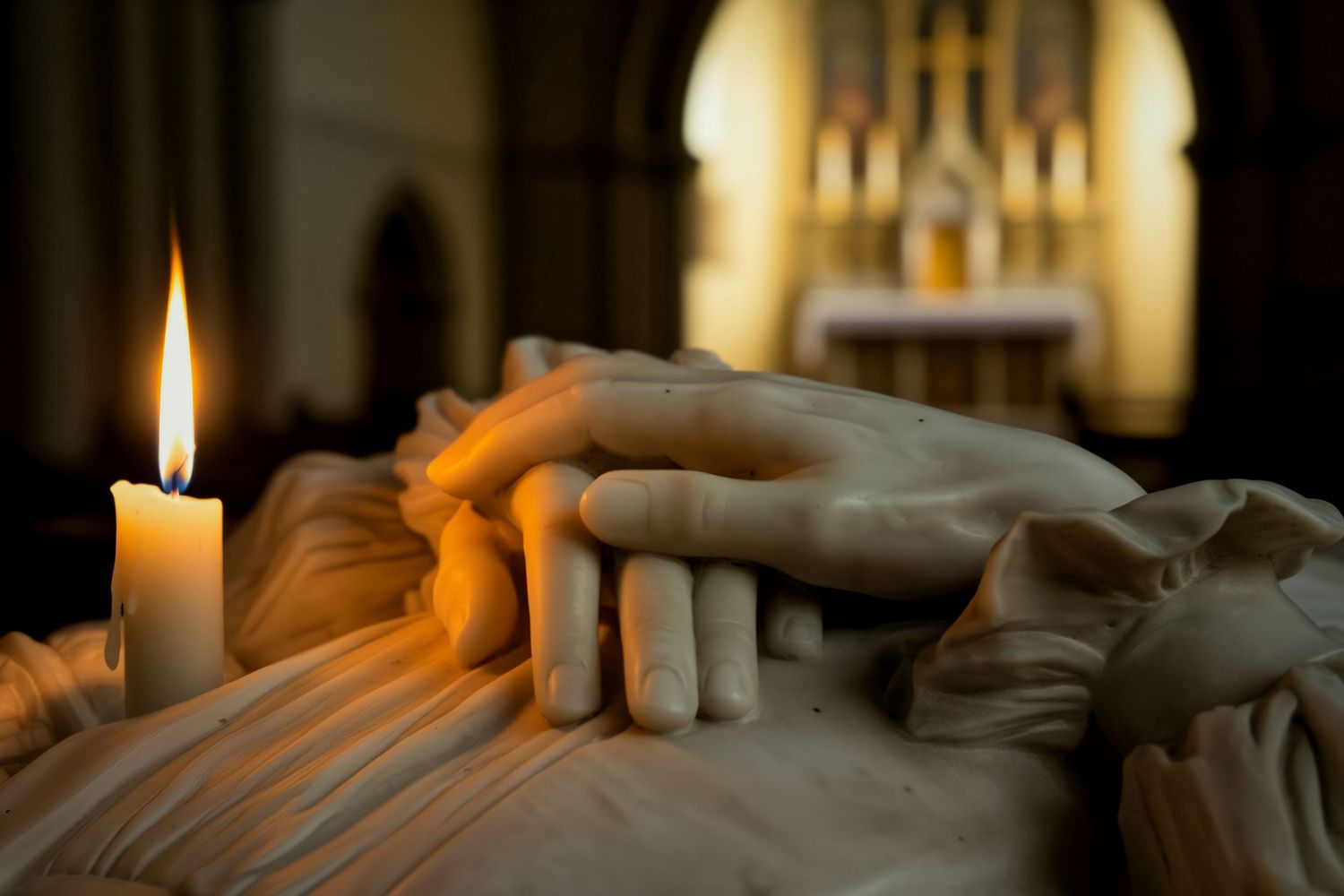
A Click of the Shutter Is Not the Beginning of the Photograph
"It's only a photograph." I've heard those words before. Sometimes spoken lightly. Sometimes as a verdict. As though the painter who labours for weeks has earned something the photographer simply takes — a fraction of a second, a button pressed, a machine doing the feeling for you.
But pressing the shutter is the shortest part of the entire process. The photograph begins long before that moment. It begins in the body before it begins in the eye.
Whenever I walk into an old church, an abandoned building, a quiet corridor or a room that has not heard a voice in decades, I don't arrive looking for photographs. I arrive looking for a feeling. There is a particular quality of attention that certain places demand — a kind of held breath that happens in the chest before the mind has caught up with it. When that feeling arrives, I stop moving. I stop thinking about light or composition or any of the technical language I've accumulated across thirty years. All of that disappears. What remains is the place itself, and something between it and me that I have never quite been able to name.
If the place doesn't move me, I don't make the photograph. The camera only appears once the location has already left its mark on me.
I remember standing in a small gallery in Lyme Regis. Among the paintings on the wall was one depicting a street in Bath — nothing dramatic, nothing designed to stop you. Afternoon light on pavement. Buildings holding the warmth of a day that was nearly over. I stood in front of it far longer than I intended to. Not because I was studying the technique. Not because I was calculating how long it had taken to paint. I stood there because it made me feel the specific temperature of a late summer afternoon I had never actually been part of. The painter had preserved something true — not just an image, but an experience. And I recognised it the way you recognise a piece of music you haven't heard since childhood. It reaches something that isn't in the brain.
That is the same feeling I search for with a camera. Not to manufacture something beautiful. Not to demonstrate skill. But to recognise a moment that already exists — one that most people will walk past without slowing down — and hold it still long enough for someone else to feel it too.
People measure artistic value by time. The painter's weeks against the photographer's second. But I don't believe time is what creates meaning in art. What creates meaning is the depth of observation that precedes the making. The years spent learning to see. The patience to wait until the atmosphere is exactly itself and nothing else. The discipline of walking away when it isn't. These things happen before the shutter, and they cannot be measured with a stopwatch. They are the work. The click is simply the moment the work becomes visible.
I watch how shadows fall across carved stone. I notice the smell of cold air inside a building that has been locked for longer than I've been alive — that particular combination of damp and oak and something older underneath, like the memory of heat from fires that went out before any of us were born. I pay attention to the quality of silence. Not all silence is the same. The silence inside an abandoned mill is different from the silence inside a church. One is the silence of something that has ended. The other is the silence of something that is still, quietly, waiting. Understanding the difference matters. What draws me to a place is rarely what I can explain immediately — it arrives as instinct, and instinct takes decades to develop.
We don't manufacture light. We don't paint emotion onto a surface. We recognise moments that already exist and preserve them before they disappear.
There is a discipline in this that I think gets lost when people talk about photography in purely technical terms. The discipline of looking slowly is not natural. Speed is natural. Moving through a place and collecting impressions is natural. Stopping, and staying stopped, and letting a room or a corridor or a ruined interior settle into you — that takes practice. It took me a long time to learn that the photographs I trust are the ones I waited for, not the ones I found.
When I stand before a painting that moves me, I never think about the brush. I think about what I feel. That is the only honest test for any work of art — not the medium, not the hours spent, not the technical vocabulary that surrounds it. Whether, when you stand in front of it, something shifts.
When someone stands before one of my photographs, I hope they don't think about the camera. I hope they feel the cold in the stone. I hope they hear, somewhere at the edge of the image, the silence the place was holding when I arrived. I hope something in them recognises something in the image — the way you recognise a smell from a house you lived in as a child, or the particular light of an afternoon you'd half-forgotten, or the sound of a bell you couldn't place but somehow knew.
That is where photography and painting finally meet. Not in the tools, not in the hours. In the quiet hope that someone will stand in front of the work and feel what stopped you in your tracks before you ever lifted the camera. If that happens, the medium becomes irrelevant. Only the emotion remains.