Why Germany Has Become One of Europe’s Great Homes for Fine Art Photography
There is a particular kind of attention that the finest photographs require. Not a glance. Not the flick of a thumb across a screen. Something slower — closer to the way a person stands in a doorway they have not entered yet, holding the moment before it passes. I have spent thirty years searching for that quality in places, and I find myself increasingly aware that certain audiences carry it with them before they have even seen the work.
Germany is one of those audiences. Not by reputation alone, but by evidence — the kind that accumulates quietly over time, in the way collectors ask questions, the way galleries present work, the way a culture has learned to sit with an image rather than consume it.
Photography has always occupied an uneasy place within the arts. It begins with reality. A shutter opens and something true enters the frame. But the finest photographs rarely document a scene exactly as it appeared. They preserve something underneath the appearance — atmosphere, memory, the particular quality of light at four in the afternoon in October when the sky is doing something that cannot quite be named. That is where fine art photography lives. Not in the facts of a place, but in what the place releases when you are quiet enough to receive it.
The images that remain memorable are often the quietest. They ask the viewer to spend time with the photograph rather than glance at it for a moment.
Germany has developed, across generations, an enduring respect for this approach. There is a word in German — Fingerspitzengefühl — that roughly translates as fingertip sensitivity, an intuitive feel for the right touch. It describes something that cannot be taught directly: the ability to sense what a situation or object requires. I think of it when I look at the way German collectors engage with photographic work. They are rarely interested in the loudest piece in the room. They are drawn to the one that changes as the light in the room changes — the one that rewards the second look, and the third.
This is not coincidence. It is culture. A culture shaped by a longstanding appreciation for craftsmanship as a form of respect. Museum-quality printing, archival cotton rag, meticulous presentation — these are not luxuries in this tradition. They are obligations. The work must be made to last. A print issued in an edition of five, each one identical and yet each one singular, is not simply an object. It is a commitment, on the part of the photographer, to make something worthy of the space it will inhabit for the next hundred years.
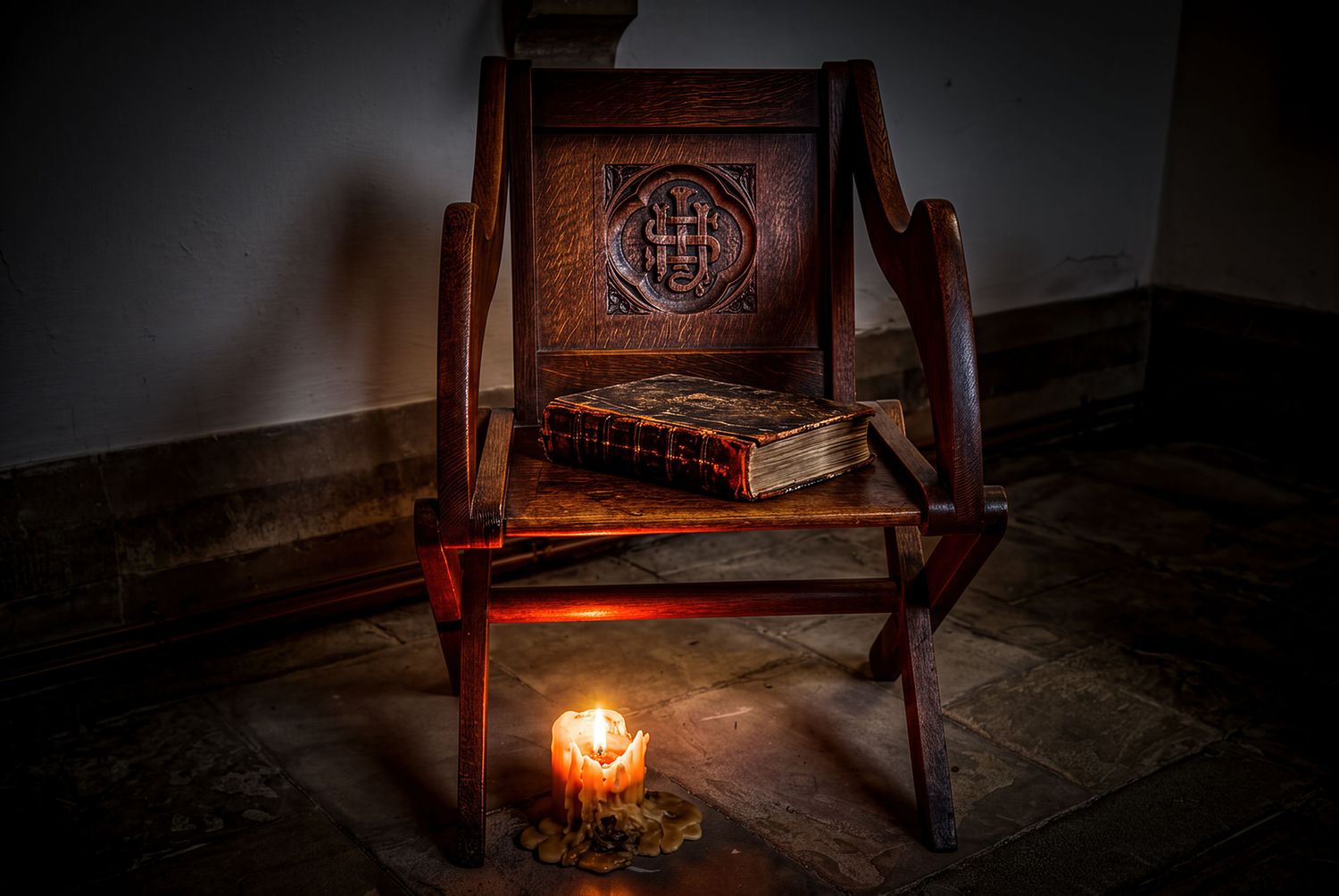
I photograph abandoned spaces, forgotten interiors, stone worn smooth by centuries of human contact. The subjects I am drawn to are not dramatic in any conventional sense. An empty chair. A beam of light crossing a flagstone floor. Ironwork left to rust in a mill that nobody enters anymore. The silence these spaces hold is not the absence of something — it is a presence in itself, thick and almost audible, like the moment after a bell stops ringing when the sound is still somehow there. That quality, I find, is precisely what a certain kind of collector recognises immediately. They have felt it somewhere — in an old church on a Tuesday morning, in a cellar that smelled of oak and damp stone, in a corridor at the end of winter. My work does not show them something new. It shows them something they already knew.
The impulse that takes me into these places is not intellectual. It is physical. There is a pull — something closer to instinct than decision — that says: this matters, go in. I have never been fully able to explain it, and I have stopped trying. The explanation would reduce it to something smaller than it is. What I can say is that the places I photograph are never simply locations. They are states of mind that have taken architectural form.
European history is saturated with this kind of place. Stone that has absorbed centuries of grief, prayer, labour and neglect. Architecture built not for efficiency but for permanence — the expectation that what is raised here will still be standing when everyone involved is long gone. The work I make in Sanctum of Shadows and across the Bone and Marble collection comes directly from this: the encounter with something that was made to endure, now left alone with its own endurance.
What strikes me about collectors who respond most deeply to this work — wherever they are from — is that they are not looking for decoration. They are looking for something to live with. That is a different relationship entirely. A photograph you live with changes as you change. You bring different things to it in different seasons. One winter it is about loss. The following spring it is about survival. The image has not moved. You have. This is, I think, why limited editions matter. Not as a mechanism of scarcity for its own sake, but because the work deserves to exist in a small number of spaces where that depth of attention is actually possible.
Germany has long been one of those spaces. Its galleries, its museums, its private collectors — they carry an understanding that photography at its most serious is not a lesser cousin of painting or sculpture. It is its own language, with its own silences, its own grammar of light. I am glad to be part of a conversation that has been happening there for a long time, and I am glad the work has found its way into it.
This essay forms part of a wider series on European fine art photography — the audiences, traditions and quiet cultural conditions that allow contemplative photographic work to find its people. More will follow. In the meantime, the full body of work is available to explore across the collections.